Do you have the spirit of modern Magellan and want to travel where only very few have set foot? Welcome to the world's most remote islands, tropical paradises and active volcanoes, where doors know no keys and only puffins dare.
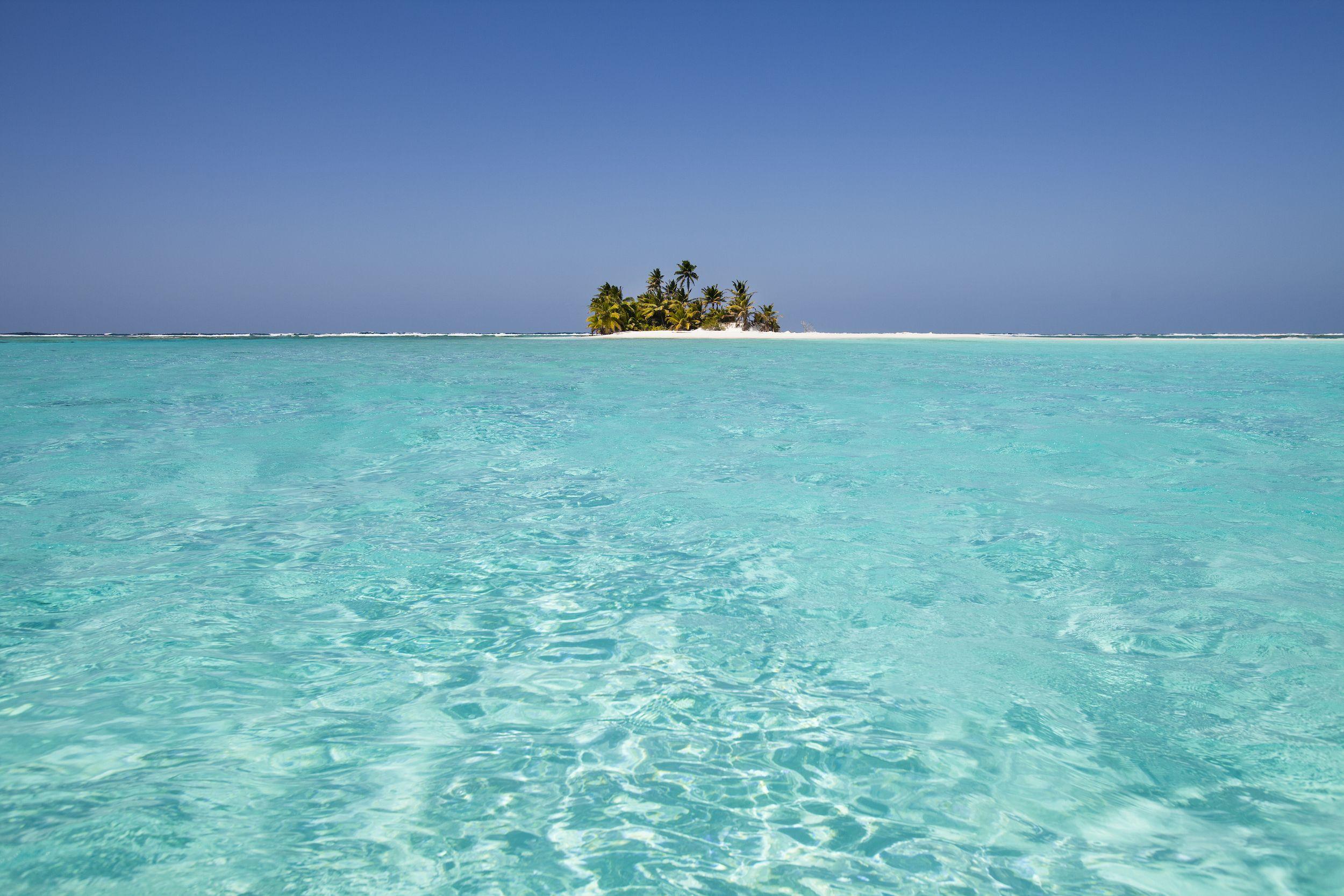
Among the world's most remote islands are Cocos Keeling, Australia
Tristan da Cunha
The 251 inhabitants of Tristan da Cunha are very friendly but extremely selective when it comes to welcoming outsiders to their island. 'You can't just arrive in Cape Town and jump on a ship bound for here,' they warn on the official website that promotes the island's history, culture and tourism.
For more than half a millennium, the inhabitants of this active volcano in the middle of the Atlantic have been trying to defend their treasure, first from the French who could have exploited it to free Napoleon, imprisoned on nearby St Helena; then from the Americans who used it as a military base in the 19th century.
Tristan da Cunha first appeared on nautical charts in 1509, when the Portuguese admiral who first sighted its repulsive reefs took note of it, without daring to land.
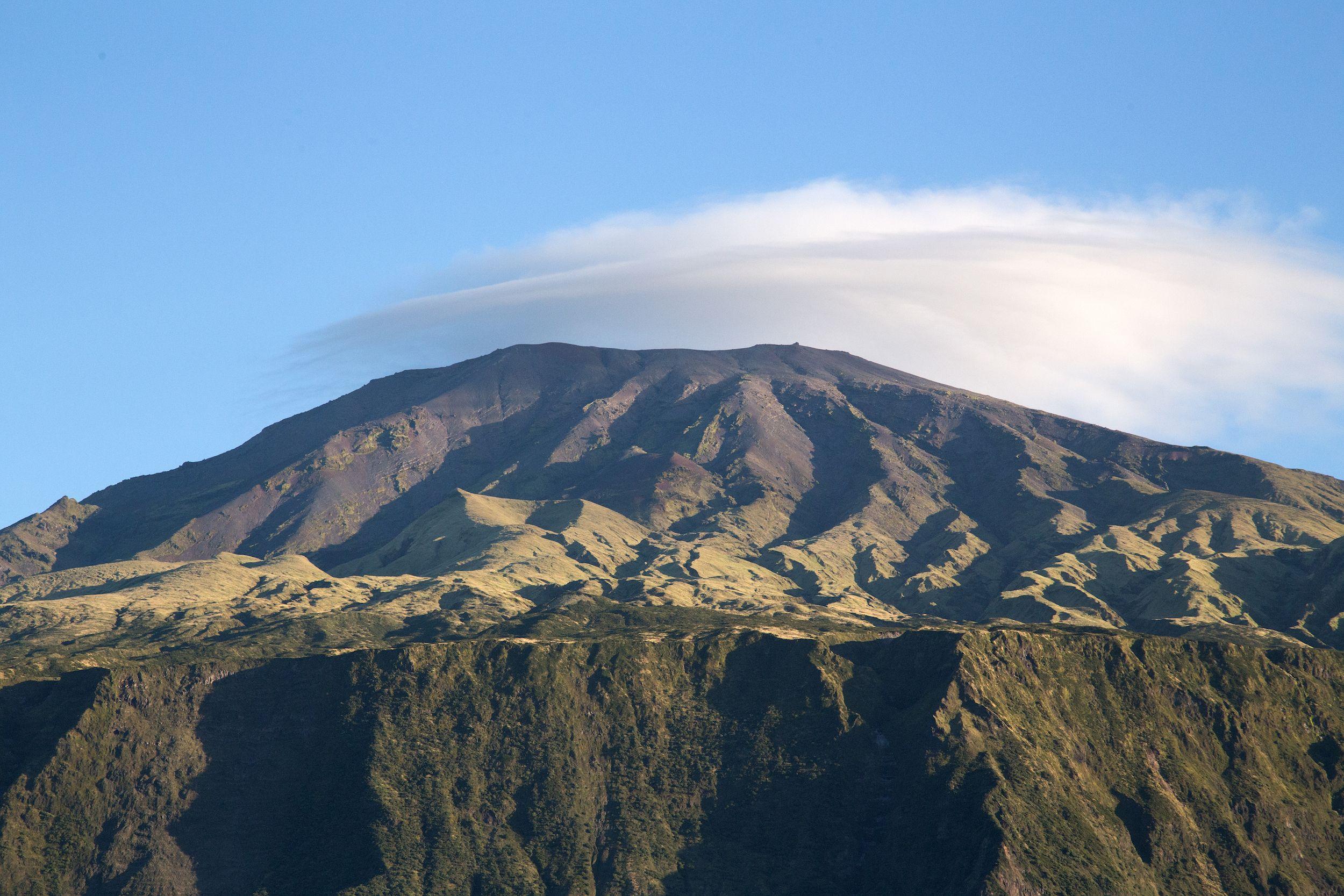
An island far from everything: Tristan da Cunha
To go to Tristan is to enter with a cautious and respectful step into a community where almost everyone is related: the Tristanians do not even lock their doors and take turns getting up at dawn to milk their sheep. Solidarity here is the glue that has enabled the small community to survive various hardships, including the eruption that forced the inhabitants to move to London for a while in the 1960s. Once the danger had passed, they all returned, snubbing the comforts of the English capital. Since it is a British Overseas Territory, the local currency is the pound sterling, but be aware that any pence you spend on the island will be equally divided among the inhabitants as stipulated in their Charter of Values, signed in 1817 by William Glass, the first governor of the island who moved here with his wife in the early 1800s.
If you look on the planisphere, the island will appear as a dot in the middle of an expanse of blue. The nearest mainland port is Cape Town, 2,810 kilometres away, which can be covered in about six days' sailing by ships that land here a couple of times a month and take on board a maximum of a dozen tourists at a time.
Practical information
You will have to book your trip well in advance and take at least a month's holiday, but to take the most incredible trip of your life is absolutely worth it.

The turquoise water surrounding the Cocos Keeling Islands
Cocos Keeling Islands
A simple 'hai' (hello) and 'terima kasih' (thank you) are the few words you will need to know before landing on West Island, in the Cocos Keeling Islands, off the coast of Australia.
Jacques Cousteau considered them to be the most beautiful islands in the world and Charles Darwin, when he ventured there in the early 1800s, was enchanted by their biodiversity equal only to that of the Galapagos. It was back in 1609 when Captain William Keeling discovered this enchanting atoll while sailing with the East India Company from Java back to his native England, but it was only more than two centuries later that Scottish Captain John Clunies-Ross moved here with his family.
Since then, the 600 people living here have been the heirs to an ethnic mix of Chinese, Papuans, Indians, Malays, Burmese, Balinese and countless other backgrounds. It is impossible to capture their essence, if not the prototype of a melting pot that has found in isolation the expression of its identity.
Prepare yourself for a journey of more than a day to reach one of the paradisiacal archipelagos furthest from the mainland: the Cocos Islands emerge from the Indian Ocean about three thousand kilometres off the Australian coast and can only be reached by air, with a four-and-a-half-hour flight from Perth, or by stopover at Christmas Island from Jakarta or Kuala Lumpur.
A nice trip, which will reward you with a white beach and a turquoise sea like few in the world, but above all a coral reef that is home to thousands of species including a pygmy angel fish, endemic to these islands. If you love snorkelling, you can count on visibility of more than 25 metres. If you dive, don't miss the wreck of a warship sunk in 1914, the Garden of Eden with its majestic corals.
Practical information
The currency is the Australian dollar. In accordance with the Islamic religion, pack long clothes, covering your shoulders and knees, and before photographing someone ask permission: it will certainly be appreciated.

St Kilda, or Hirta in Gaelic, is one of the most mysterious islands in the world
Sign up for our newsletter! For you every week travel tips, special offers, stories from the world and 30% discount on your first order.
Saint Kilda
The most mysterious island in the Outer Hebrides is St Kilda, or Hirta in Gaelic. Just over 3 kilometres in diameter, it is only 64 kilometres from the island of Harris, from where licensed boats depart to take you to this fascinating and sometimes ghostly Scottish island, surrounded by huge rocky outcrops rising from the sea.
Despite its proximity to other islands, the feeling of isolation you will experience here is unique: there is no phone service and no Wi-Fi. To add a touch of mystery, a baleful legend has it that babies here cannot survive for more than a month, which is why Kildane women used to go to neighbouring islands to give birth.
The naturalist James Fisher, who visited St Kilda in the 1940s, wrote that visitors to St Kilda will be haunted for the rest of their lives by this place and haunted by the impossibility of describing it to those who have not seen it: its sheer cliffs overhanging the icy sea, its green grass surface like a velvet blanket, the little houses all alike and the dry stone walls surrounding properties that have been abandoned for almost a century.
It has been uninhabited since the 1930s, when its 36 inhabitants abandoned it to move to Scotland. Since then, the island's master has been the Fratercula arctica, the friendly puffin, a funny Atlantic bird that nests and breeds here. The archipelago of which St Kilda is a part is one of Scotland's four Unesco World Heritage Sites, among the few to be considered natural, marine and cultural at the same time - all the more reason to visit.
Practical information
You can reach it by day from Harris or camp for up to 5 nights in the only designated area on the island, which can accommodate a maximum of 6 people.
Gaia Giordani is a novelist (so far one), teaches sociology of communication and travels a lot with her imagination. Her favourite places in the world are Cazzano di Tramigna (VR) where she was born, Turin where she lives and the Felidhoo atoll where she went night swimming with sharks.